
Disclosure: This post contains affiliate links. Learn more
The debate between whey and plant-based protein has never been more popular in the US. In 2026, athletes and fitness enthusiasts are looking for the most effective way to recover and grow stronger. While whey has been the king of the gym for decades, modern plant protein blends are now giving it a serious run for its money.
Choosing the right protein is personal. It’s not just about muscle; it’s about how your body feels after you drink it. Let’s look at the science to see which one deserves a spot in your shaker bottle.
The Power of Whey Protein
Whey protein comes from milk. It is a “complete” protein, meaning it contains all nine essential amino acids. What makes whey special is its high concentration of leucine, the specific amino acid that acts as a “switch” to start muscle growth.
Because whey is absorbed very quickly, it hits your muscles fast. This makes it a top choice for a post-workout shake when your body is hungry for nutrients to begin the repair process.
The Rise of Plant Protein
In the past, plant proteins were seen as “incomplete.” However, 2026 technology has changed the game. Today’s high-quality plant powders blend different sources—like pea, brown rice, and hemp—to create a complete amino acid profile that rivals whey.
Plant protein is often easier on the digestive system. If you experience bloating or gas with dairy products, a plant-based blend might be the secret to reaching your goals without the discomfort.
Which One Wins for Muscle Growth?
Recent studies suggest that as long as you get enough total protein and leucine, the source doesn’t matter as much as we once thought. Both whey and plant protein can build significant muscle mass when combined with a solid strength-training program.
The key is consistency. If you enjoy the taste and feel of your protein, you are more likely to drink it every day, which is what leads to real results over time.
Comparing the Two:
- Digestion Speed: Whey is fast; Plant is medium to slow.
- Gut Health: Plant protein is usually better for those with dairy sensitivities.
- Amino Acids: Whey is naturally high in leucine; Plant blends are carefully formulated to match.
- Environmental Impact: Plant-based options often have a smaller carbon footprint.
Flavor and Texture Differences
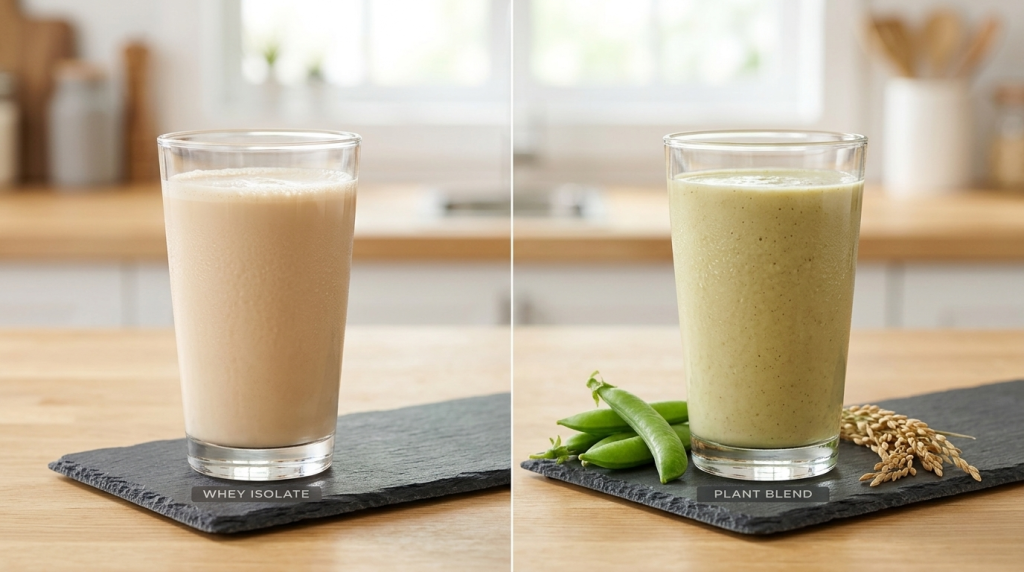
Whey protein is known for its creamy, milkshake-like texture. It mixes easily with water or milk. Plant protein can sometimes have a slightly “earthy” or thicker texture, though modern formulas are becoming incredibly smooth.
Many US users find that plant proteins work best when blended into a smoothie with a banana or almond butter, while whey is perfect for a quick shake on the go.
Making Your Final Choice
If you want the fastest possible absorption and don’t have issues with dairy, whey isolate is a fantastic, proven option. It is the gold standard for a reason.
However, if you want a cleaner, dairy-free option that supports your muscles and your gut health, a high-quality plant protein blend is just as effective for building a strong, lean body in 2026.
FAQ: Whey vs Plant Protein
Is whey protein better than plant protein? Not necessarily. Both are effective for muscle growth. Whey is faster-absorbing, while plant protein is often better for digestion.
Does plant protein have enough amino acids? Yes, as long as it is a “blend” (like pea and rice together), it provides everything your muscles need to grow.
Can I mix both together? Absolutely. Some athletes in the US mix whey and plant protein to get a variety of absorption speeds and nutrients.
Will plant protein make me feel bloated? Usually, it’s the opposite. Plant protein is often recommended for people who get bloated from the lactose in whey.
Which is better for weight loss? Both can help with weight loss by keeping you full. Choose the one that fits best with your overall diet and lifestyle.
Talk to your doctor before starting any new supplement.